
BlogKitesurf ·
The Ultimate Master Guide to Kitesurfing in Essaouira: Morocco's Capital of Wind
Alizés, 4 km bay, IKO progression and coastal spots: the ultimate master guide to kitesurfing in Essaouira, Morocco's capital of wind.
Par Équipe Elite School · moniteurs certifiés IKO
There is a distinct moment when you stand on the wide, golden sweeping beach of Essaouira and realize why this ancient citadel city holds a legendary status in the international wind sports community. As the morning fog evaporates under the North African sun, a powerful, steady Atlantic breeze kicks in, transforming the giant, crescent-shaped bay into a colorful playground of flying kites and carving boards.
Known worldwide as the "Windy City of Africa," Essaouira is far more than just a picturesque Moroccan tourist destination. It is a world-class kitesurfing Mecca. Whether you are an absolute beginner looking to fly a trainer kite for the very first time, an intermediate rider working on riding upwind, or a seasoned pro looking to launch massive air off Atlantic kickers, this comprehensive master guide covers absolutely everything you need to know about kitesurfing in Essaouira.
1. The Anatomy of the Wind: Understanding the Essaouira Climate
What makes Essaouira such an extraordinarily reliable destination for kitesurfing? The secret lies in a localized meteorological phenomenon known as the Alizés. These are the thermal trade winds that blow parallel to the Moroccan coastline from a north/north-easterly direction. As the arid, inland desert plains of Morocco heat up under the sun, the hot air rises rapidly. This vacuum pulls in the cooler air resting over the Atlantic Ocean. Because of the unique topography surrounding Essaouira, this air is funneled and accelerated, acting as a natural compressor that delivers exceptionally reliable, steady wind.
The Golden Peak (May to September)
This is the high season for pure wind junkies. During these summer months, the Alizés blow with mechanical consistency. The wind typically kicks in around midday, steadily building from a comfortable 15 knots up to a roaring 25 to 35 knots by late afternoon. If you are planning a trip during this window, pack small kite sizes (typically 5m to 9m depending on your body weight).
The Shoulder Months (March, April, and October)
A fantastic time for riders who enjoy a mix of traditional wave surfing and kitesurfing. The wind is slightly less aggressive, averaging 14 to 22 knots, which allows for larger kite sizes (10m to 14m) and smoother, more manageable water surfaces.
The Winter Swell (November to February)
While the thermal summer trade winds take a break, winter brings massive North Atlantic groundswells. This is prime time for wave-riding purists. The wind during this period is driven by passing low-pressure weather systems, making it less predictable but offering epic cross-shore or side-shore days with clean, towering wave faces.
2. Why Essaouira is the Perfect Natural Classroom
For beginners, choosing the right geographic location to learn kitesurfing is the difference between rapid, safe progression and pure frustration. Essaouira's natural bay layout acts as a highly protective, encouraging environment.
The Safety of Side-Onshore Winds
One of the most critical safety factors of Essaouira Bay is the wind direction. The Alizés blow side-onshore from the right (starboard tack). This means that if you experience a technical failure, drop your kite, or lose your board, the natural movement of the wind and water will always gently drift you back safely onto the soft sand beach. You never have to worry about offshore currents pulling you out into the open ocean.
Mogador Island Protection
Mogador Island breaks the raw Atlantic outer groundswells and creates flat water zones near the shore — perfect for learning your water starts.
Massive 4 km Sandy Beach
No rocks, reefs, or piers in the primary kite zone: safe launching, landing, and packing up your gear.
3. The Progression Arc: From Zero to Independent Kiter
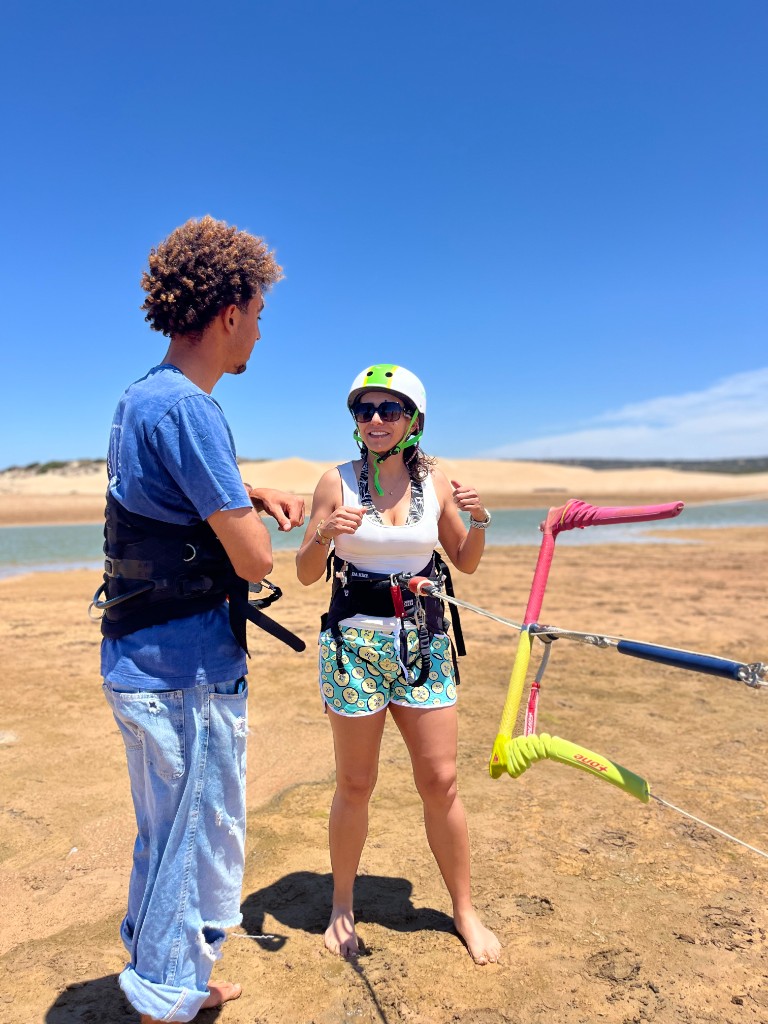
Kitesurfing is not a sport of brute physical strength; it is a discipline built entirely on technique, finesse, and muscle memory. When you sign up for a structured course at our school, your progression follows a rigorous, step-by-step roadmap aligned with international IKO (International Kiteboarding Organization) safety standards.
1. Kite Control & Wind Window Theory (Hours 1–3)
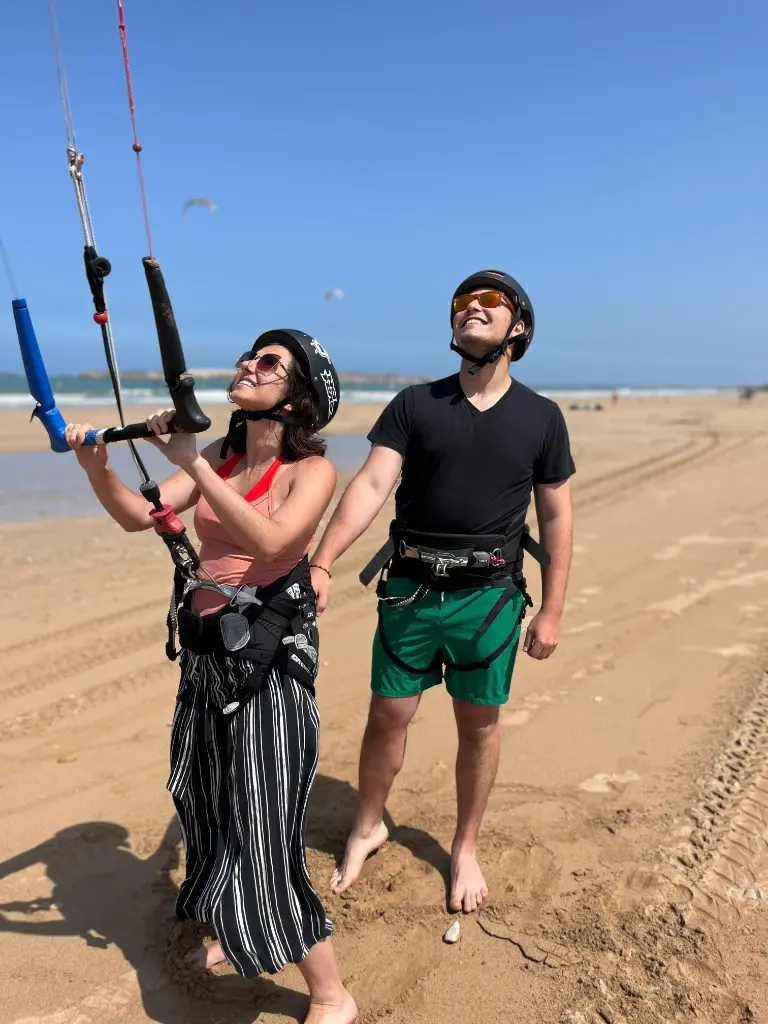
Everything begins on dry land. You will learn how to identify the wind window, master the neutral and power zones, set up the lines, and practice flying a small trainer kite. Crucially, you will practice using the safety quick-release systems until it becomes pure second nature.
2. Water Body Dragging (Hours 4–6)
Time to lose the land and enter the water without a board. Powered entirely by a full-sized inflatable kite, you will practice "body dragging" downwind and upwind. This step teaches you how to generate controlled power, steer the kite with one hand, and recover a lost board in deep water.
3. The Steady Water Start (Hours 7–10)
The ultimate milestone. You will learn how to manage the board with your feet while keeping the kite steady at the 12 o'clock position. You will practice diving the kite into the power zone to generate the lifting force needed to stand up on the board and glide across the water surface.
4. Riding Upwind & Autonomy (Hours 11+)
Once you can stand up, the focus shifts to body posture and edging. You will learn how to drive your heels into the water and lean back against the pull of the kite, allowing you to ride upwind, return to your exact starting point, and achieve complete riding freedom.
4. Top Kitesurfing Spots in the Essaouira Region
While the massive town bay is the main arena, advanced and intermediate kiters can explore several spectacular spots scattered along the local coastline.
Essaouira Main Beach (The Bay)
Level: Perfect for all levels (Beginner to Pro). Flat water to small chop near the shore due to the protection of Mogador Island. Further out, near the edge of the island, clean rolling swells form, creating excellent ramps for jumping or carving strapless directional wave boards. The vibe: social, expansive, and packed with energy.
Sidi Kaouki (25 km South)
Level: Advanced Intermediate to Professional. Completely exposed to the raw Atlantic Ocean, Sidi Kaouki offers powerful shore breaks, strong currents, and significantly punchier waves. The wind here is often 3 to 5 knots stronger than in the main town bay. An incredible playground for experienced wave kiters.
Moulay Bouzerktoun (25 km North)
Level: Strictly Advanced / Expert. A world-renowned windsurfing and kitesurfing wave spot. Moulay features a rocky reef launch and fast, hollow right-hand breaking waves. An intense, high-adrenaline arena that plays host to international wind-sport competitions.
5. Essential Packing List & Equipment Tips
To maximize your comfort during an intensive kitesurfing holiday in Essaouira, packing the right gear is essential.
Wetsuit Selection
The Atlantic Ocean currents running along the Moroccan coast keep the water crisp and refreshing year-round. Summer (May–Sept): Water temperatures range between 17°C and 19°C. A high-quality 3/2mm full-length wetsuit is highly recommended. Spring/Autumn/Winter: Water drops to 15°C to 17°C. A flexible 4/3mm full wetsuit is the absolute ideal choice for long multi-hour sessions.
Sun and Skin Protection
The Moroccan sun combined with strong maritime winds can cause rapid dehydration and sunburn if you aren't prepared. Always pack waterproof zinc-based sunblock (SPF 50+) designed for water sports, polarized floating sunglasses with a secure head strap, and a protective neoprene beanie or trucker cap with a chin cord.
The Ultimate Local Pro Tip
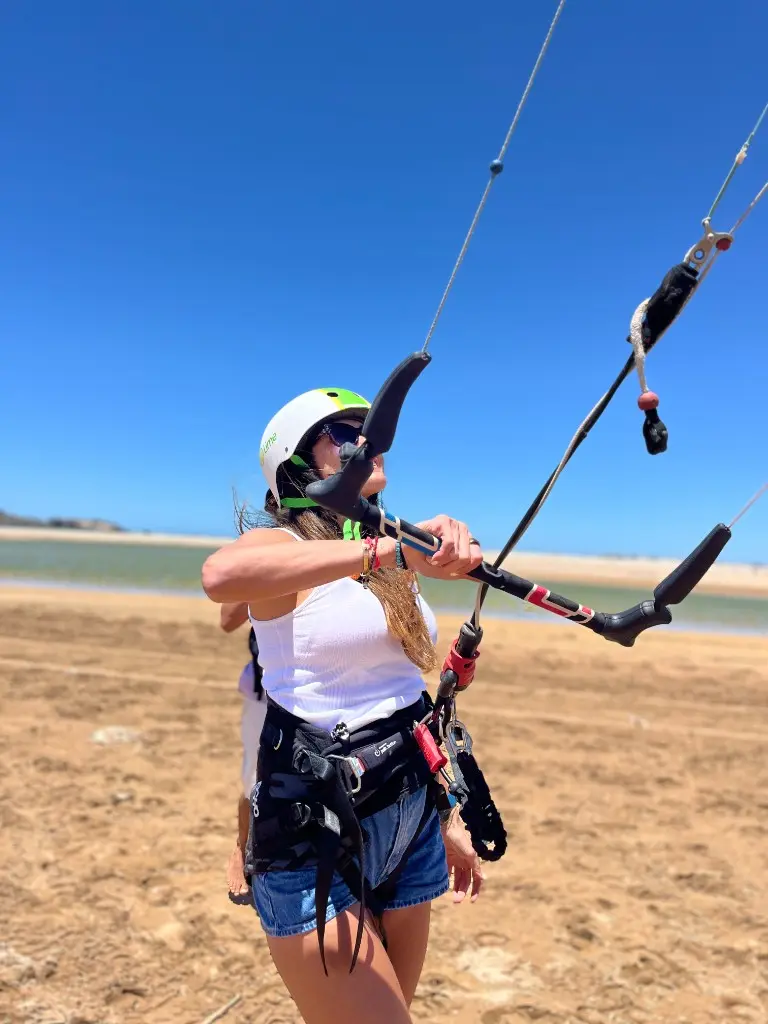
Do not make the classic beginner mistake of fighting the kite bar with all your physical arm strength. Kitesurfing power is transferred directly into your harness hook via your core body weight. Keep your hands light on the bar, relax your shoulders, and let your harness do the heavy lifting. The lighter your grip, the more precise your control!
6. The Apres-Kite Lifestyle: The Magic of the Medina
What truly sets a kitesurfing trip to Essaouira apart from isolated beach resorts around the world is the intoxicating cultural experience waiting for you the second you roll up your lines. Essaouira's historical center is a UNESCO World Heritage site, enclosed by massive stone sea fortresses — a wonderfully relaxed, bohemian atmosphere far removed from the hustle of Marrakech.
The Culinary Reward
After burning thousands of calories working the wind, treat yourself to a sizzling, slow-cooked tagine laden with local spices, or walk down to the bustling fishing port to select fresh sea bass, sardines, or lobster grilled right in front of you.
The Ritual Recovery
There is no better way to restore tired forearm and shoulder muscles than experiencing a traditional Moroccan Hammam. Let the steam open your pores before an invigorating scrub with local black eucalyptus soap (Sabon Beldi) and a soothing massage with pure Argan oil grown right in the region.
The Sunset Gathering
As darkness falls, the city's creative pulse comes alive. Head up to one of the many panoramic rooftop terraces overlooking the ocean to enjoy a hot cup of fresh mint tea, share riding stories with a global community of nomadic kiters, and listen to the hypnotic rhythms of live Gnawa soul music echoing through the sea breeze.
Join the Windy City Tribe
Whether you want to invest in a dedicated 6-Day Kitesurfing Camp to completely master the basics, book private one-on-one coaching to perfect your backrolls, or rent the latest premium gear to explore the coast, our local surf and kite family is here to guide you safely through every step of your journey.
The wind is blowing, the Atlantic is waiting — contact Elite School on WhatsApp for a personalised quote. IKO coaches, 14 Rue Skala, since 2008.