BlogSurf ·
Essaouira Surf School: Your Ultimate Guide to Surfing in Morocco
Complete guide to choosing an Essaouira surf school: spots, seasons, ISA coaching, gear, and logistics on Morocco's Atlantic coast.
Par Équipe Elite School · moniteurs certifiés IKO
Choosing the right Essaouira surf school is the first step toward experiencing world-class waves, expert coaching, and the rich cultural heritage of Morocco's Atlantic coast. Positioned along a massive crescent-shaped bay, Essaouira provides a unique combination of mild Atlantic swells, sheltered coastal environments, and reliable trade winds.
Whether you are catching your very first wave in waist-deep water or fine-tuning your stance before heading out to regional point breaks, local certified instructors offer structured progression tailored to every skill level. Understanding the unique ocean dynamics, seasonal weather patterns, and proper gear selection ensures your surf trip to North Africa is both safe and rewarding. This comprehensive guide details everything you need to know about learning to surf in Essaouira.
Why Choose Essaouira for Your Surfing Journey?
The Atlantic shoreline of Morocco is lined with renowned surf destinations, yet Essaouira remains one of the most accessible and versatile locations for ocean enthusiasts. Unlike heavy, shallow reef breaks found further south, the main bay at Essaouira features a gently sloping sand bottom that absorbs heavy ocean energy, creating long, manageable rolling waves.
Ideal Conditions for Beginners and Intermediates
The geography of the bay provides natural protection from aggressive ocean swells. Mogador Island, situated just offshore, acts as a massive natural breakwater. It refracts incoming Atlantic swells, reducing their raw power and turning heavy ocean waves into gentle, predictable rollers.
Sandy seabed eliminates the risk of injuries associated with sharp coral or rocky bottoms, making it ideal for those learning control and pop-up mechanics. Gradual depth allows students to practice catching white water waves while remaining safely within standing depth. The broad bay area offers miles of open beach, preventing crowding and giving every surfer plenty of personal space to maneuver.
For intermediate surfers, the outer sections of the bay produce clean lines during lower tides, offering long rides ideal for perfecting turns, trimming, and improving overall board control.
Year-Round Moderate Climate
Essaouira benefits from a coastal microclimate that keeps temperatures comfortable throughout the calendar year. While inland cities like Marrakech face severe summer heat, Essaouira remains moderate due to maritime breezes.
Summer temperatures average between 22°C and 26°C. Winter air temperatures typically range from 16°C to 20°C. Water temperatures range between 16°C in mid-winter to 21°C in late summer, requiring a standard 3/2mm or 4/3mm neoprene wetsuit year-round.
Ocean Dynamics: Understanding Wind, Swell, and Tide in Essaouira
To maximize your time in the water, understanding local weather patterns is crucial. The Atlantic coastline is shaped by atmospheric pressure systems that create distinct periods of wind and wave energy.
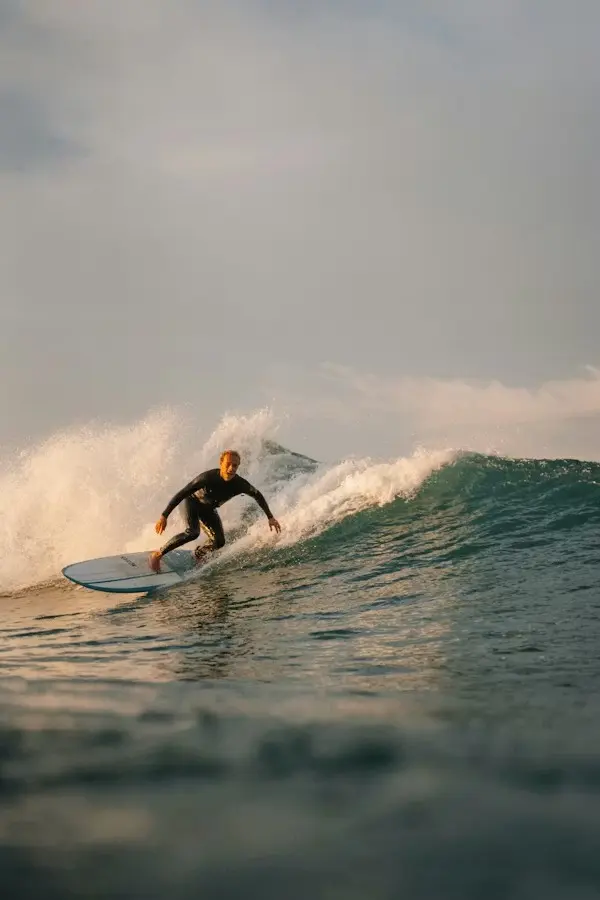
The famous trade winds, known locally as alizés, blow predominantly from the north-northeast. These winds are strongest during late spring and summer (May through September), transforming the bay into a world-renowned destination for wind-powered watersports like kitesurfing and wing foiling. For traditional surfing, early morning hours usually feature glassy, windless conditions or light offshore breezes, providing clean wave faces perfect for surfing. As thermal heating builds inland during the afternoon, trade winds pick up, creating choppier conditions inside the bay. During autumn and winter, the trade winds ease significantly, giving way to groundswells and glassier water conditions throughout the day.
The coastline receives continuous North Atlantic swells generated by low-pressure systems moving across the ocean. North-West (NW) and West-North-West (WNW) swells are the most common, hitting the coast cleanly and delivering structured wave sets. Low to mid-tide usually creates sharper wave faces, while high tide produces softer, fuller waves. Beginners generally benefit from practicing during mid-tide transitions when wave energy is stable and water depth is manageable.
Surf Spot Guide: From the Main Beach to Regional Point Breaks
While the central beach is the primary classroom for any top Essaouira surf school, the surrounding region features diverse surf breaks suitable for progression.
1. Essaouira Main Beach (Plage d'Essaouira)
Located directly in front of the town's promenade, this expansive sandy beach is the core spot for beginner surf instruction. Skill level: absolute beginner to lower intermediate. Bottom type: pure sand. Best tide: mid-tide. Characteristics: consistently soft white water, shallow entry zones, and minimal currents near the shore.
2. Diabat and the Southern Dunes
Moving south down the continuous curve of the beach toward Diabat, the protection offered by Mogador Island decreases slightly, allowing larger wave sets to reach the shore. Skill level: intermediate. Bottom type: sand with occasional scattered sandbars. Best tide: low to mid-tide. Characteristics: uncrowded wave peaks, longer rides, and slightly stronger currents requiring basic paddling efficiency.
3. Sidi Kaouki
Situated roughly 25 kilometers south of Essaouira, Sidi Kaouki offers open-ocean conditions exposed to full Atlantic swells. Skill level: intermediate to advanced. Bottom type: sand beach break with subtle rocky outcrops at the points. Best tide: all tides depending on swell size. Characteristics: powerful beach breaks, faster wave walls, and higher wave consistency when Essaouira bay is flat.
4. Moulay Bouzerktoun
Located 25 kilometers north, Moulay Bouzerktoun is an exposed point break famous among windsurfers and experienced wave riders. Skill level: advanced. Bottom type: reef and rock shelf. Best tide: high tide. Characteristics: fast, hollow waves crashing over reef zones — recommended strictly for experienced surfers accompanied by local guides.
What to Expect from Professional Surf Coaching
Joining a structured program at an ISA (International Surfing Association) or IKO certified center ensures fast progression, correct technical habits, and maximum safety in the ocean. Professional instruction breaks down complex ocean movements into clear, repeatable physical actions — from land briefing and ocean safety through pop-up mechanics, white water practice, and introduction to unbroken waves.
Lesson Formats
Group lessons: great for families, friends, or solo travelers looking for a fun group experience. Group sizes are kept small (maximum 6 students per instructor) to ensure safety.
Private coaching: one-on-one instruction tailored specifically to your speed of learning, allowing for rapid technique adjustment and real-time feedback.
Kids lessons: specialized programs focusing on water confidence, fun movement patterns, and maximum safety with higher instructor-to-student ratios.
Essential Gear for Surfing in Essaouira
Having proper, high-quality equipment is critical for comfort, warmth, and progression. A certified Essaouira surf school supplies all necessary gear tailored to your build and skill level — soft-top surfboard matched to your height and weight, 3/2mm or 4/3mm neoprene wetsuit, protective rashguard, surf wax, and leash.
Using the right board speeds up progression significantly. Beginners often struggle when using boards with insufficient volume — soft-top foam boards offer maximum stability and soft impact protection, while mini-malibus bridge the gap to shortboards as skills develop.
Water temperatures in the Atlantic require wetsuits year-round. A 3/2mm wetsuit is ideal for spring and summer months; during winter, a 4/3mm chest-zip wetsuit keeps core body temperatures warm. Bring swimwear, a towel, and reef-safe sun protection — the school handles the rest.
Seasonal Guide: When to Plan Your Surf Trip
Autumn (October to December)
Autumn is widely considered the ultimate window for ocean enthusiasts in Morocco. Clean Atlantic groundswells arrive with minimal wind disruption and water temperatures remain warm from summer heat. Best for all surfer levels — from beginners learning in the bay to intermediates seeking longer waves outside the town.
Winter (January to March)
Winter brings powerful North Atlantic storms that deliver robust, consistent swells to the North African coastline. While open coast spots like Sidi Kaouki get big, Essaouira Bay acts as a safe filter, converting large swells into ideal teaching waves. Best for surfers wanting guaranteed wave size and progress-oriented intermediates.
Spring (April to June)
Spring features a mix of lingering winter swells and early thermal breezes. Consistent morning glass with afternoon trade winds building up — great conditions for combining early morning surf sessions with afternoon kitesurfing or wing foiling lessons.
Summer (July to September)
Summer brings sunny skies, warm weather, and consistent trade winds. Ocean swells drop in size, making the bay a calm, controlled environment for first-time surfers. Best for families, total beginners, and travelers looking to combine coastal culture with gentle surf practice. Morning sessions are essential.
Combining Watersports: Surf, Kitesurf, and Wing Foil
One of Essaouira's greatest advantages is its versatility. Known historically as the "Wind City of Africa," the bay offers ideal conditions for multiple sports throughout the day.
Morning (8:30 AM – 11:30 AM): surf session — light wind, clean waves, glassy water. Midday: lunch and medina exploration. Afternoon (2:00 PM – 5:00 PM): kitesurf or wing foil session when thermal trade winds blow.
Surfing focuses on wave reading, board balance, and ocean entry timing during calm morning hours. Kitesurfing takes advantage of afternoon trade winds (alizés) to practice power control and long runs across flat water. Wing foiling represents the modern shift in ocean sports, utilizing a handheld wing and hydrofoil board to glide above choppy water with minimal effort.
By selecting an integrated sports center certified by both ISA and IKO, you ensure consistent instructional standards across all three disciplines using modern safety equipment and radio communication tools where applicable.
Logistical Essentials: Traveling to and Around Essaouira
Essaouira-Mogador Airport (ESU) is located just 15 km south of the city center, offering direct flights from major European hubs with transfers to the beach in roughly 20 minutes. Marrakech-Menara Airport (RAK) is 170 km east — regular highway buses (CTM or Supratours) and private transfers connect Marrakech to Essaouira in approximately 2.5 to 3 hours. A well-paved highway passes through argan forest reserves for those driving.
Staying close to the main promenade or inside the UNESCO-listed Medina gives you the perfect mix of sport and culture — a 10-minute walk from the medina to the beach. After morning water sessions, you can easily walk into the car-free Medina to enjoy traditional tagines, fresh Atlantic seafood at the historic fishing port, and local craft shops.
Safety Standards, Ocean Rules, and Environmental Care
Respecting safety guidelines and ocean etiquette protects both you and fellow surfers in the lineup.
Always assess the spot first: observe wave entry points, currents, and shore breaks before entering the water. Respect priority rules — the surfer closest to the breaking peak has priority; avoid dropping in on someone already riding a wave face. Control your equipment: always hold on to your surfboard when paddling through white water and never ditch your board if other surfers are behind you.
Protect the marine environment: keep beaches clean, avoid leaving plastic waste behind, and use ocean-friendly, reef-safe zinc or sunscreens.
FAQ — Frequently Asked Questions
When is the best time to go surfing in Essaouira?
Surfing is possible year-round in Essaouira. Beginners will find ideal, gentle conditions during the summer months (June to September) when waves are smaller and easier to manage. Intermediate and advanced surfers should visit between October and April, when larger Atlantic groundswells deliver consistent, long wave faces across the region.
Do I need prior experience to take lessons at an Essaouira surf school?
No prior experience is necessary. Beginner programs are designed specifically for first-time surfers. Certified instructors guide you through water safety, paddling techniques, and pop-up mechanics in shallow water where you can comfortably stand on the sandy ocean floor.
What equipment is provided during surf lessons?
All technical equipment is provided by the center. This includes a high-buoyancy soft-top surfboard matched to your height and weight, a clean 3/2mm or 4/3mm neoprene wetsuit, protective rashguard, and specialized surf wax. All you need to bring is swimwear, a towel, and sun protection.
Is the main beach in Essaouira safe for children learning to surf?
Yes, Essaouira beach is extremely safe for children. The bay features a soft, obstruction-free sandy bottom, no sharp coral or rocks, and gentle wave dynamics caused by the protective barrier of Mogador Island. Lesson groups maintain high instructor-to-student ratios to ensure safety and individual support for younger learners.
How do I get from Marrakech to Essaouira for a surf trip?
You can easily reach Essaouira from Marrakech by taking comfortable direct coach buses (Supratours or CTM), which run several times daily and take around 3 hours. Alternatively, private door-to-door taxi transfers or rental cars are available directly from Marrakech-Menara Airport or city center hotels.
How to choose your spot by level?
This table summarises five spots to plan your session by level, season and wave type.
| Board Type | Skill Level | Material | Key Feature |
|---|---|---|---|
| Soft-Top (Foamie) | Beginner | High-density EVA foam | Maximum stability, high buoyancy, soft impact protection |
| Mini-Malibu / Funboard | Intermediate | Epoxy / Fibreglass | Maneuverability combined with ease of paddling |
| Shortboard | Advanced | Fibreglass / PU | Fast turns, responsive edge control, duck-diving capability |
Ready to Ride Your First Wave in Morocco?
Whether you are looking to catch your very first white water wave, refine your technique on green waves, or combine surfing with kitesurfing and wing foiling, learning with a certified Essaouira surf school ensures high instruction standards, top-quality gear, and an unforgettable ocean experience on Morocco's Atlantic coast.
Contact Elite School on WhatsApp +212722423749 to lock in your dates, instructor, and equipment. See you on the water!
Beginner Surf Lesson Flow at Essaouira
The 4 steps of a 2-hour session at Elite School: land briefing, white water practice, in-water corrections, and green wave introduction.
À partir de 30 EUR · durée indicative 2 h
Land Briefing & Ocean Safety (15 min)
Spot analysis, rip currents, board safety, and pop-up mechanics practiced on the sand.
White Water Practice (45 min)
Catching broken waves, body position, and pop-up timing in shallow water.
In-Water Correction & Feedback (30 min)
Stance correction, weight distribution, and eye direction — individual feedback from your instructor.
Unbroken Wave Introduction (30 min)
Paddling out, timing green waves, and angled take-offs for students ready to progress.